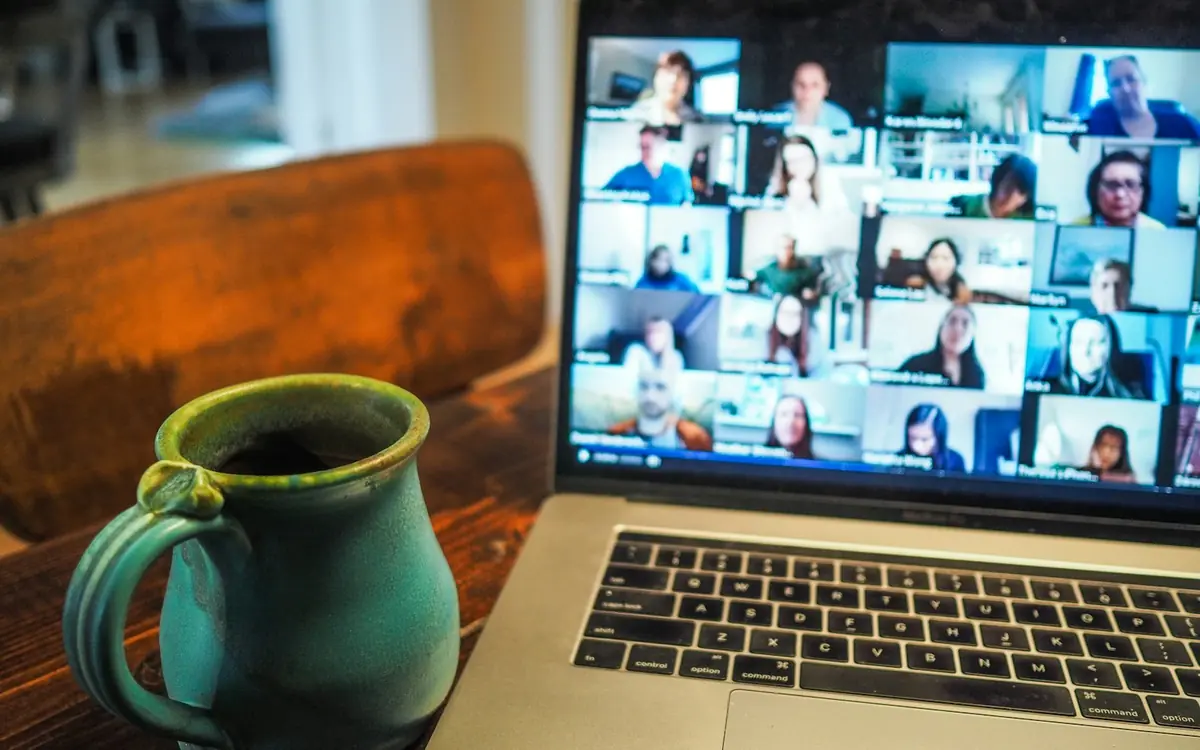
A video call with the patient makes sense as a follow-up after a treatment already carried out in the clinic, when seeing them on video is enough to understand how they are doing. It does not replace the consultation. The code of medical ethics says so plainly: the consultation is a direct relationship with the patient and cannot be replaced by an exclusively virtual relationship.
In the clinical record, after a video call, there must be the same things there would be after an in-person meeting, plus those that say how the connection took place: what the patient accepted, who was present, whether the image and voice were sufficient, what you decided.
What the code of ethics says
Art. 78 of the code of medical ethics (opens in a new tab) is the article on information technology. For any tool, the doctor guarantees the obtaining of consent, the protection of confidentiality, the relevance of the data and, for the part that concerns them, the safety of the techniques. When they use technologies for prevention, diagnosis, treatment or clinical surveillance, they adhere to the criteria of proportionality, appropriateness, effectiveness and safety.
The application guidance attached to the article goes into detail. Three points touch on the video call:
- the virtual relationship does not replace the consultation (point 6, in the box above);
- remote consultations and second opinions must respect all the ethical rules governing the relationship between the doctor and the person being cared for (point 13);
- the doctor must use reliable systems, which guarantee availability, confidentiality and methods of data storage (point 3), and obtain consent to data processing with any IT tool (point 1).
The text cited is the 2014 version with the updates to arts. 54, 56, 76 and 77; for the version in force it is worth checking on the website of the national federation of medical associations.
Who is liable for a remote service
Italian Law 24/2017 (Gelli-Bianco), in art. 7, paragraph 2, extends the liability of the facility for the work of healthcare professionals also to services carried out through telemedicine. Telemedicine is therefore expressly included in the rules: a video call is not a separate activity.
Consent: which one, and how it is documented
There are two levels, which it is worth keeping separate.
Consent to treatment. Italian Law 219/2017 (opens in a new tab) (art. 1, paragraph 4) says that informed consent, obtained in the ways and with the tools best suited to the patient's condition, is documented in writing or through video recordings, and in whatever form it is given it must be placed in the clinical record. For a follow-up after a treatment, informed consent to the treatment should already be in the clinical record: the additional information needed concerns the method. The patient must know that the consultation is remote, what the connection allows and what it does not, and that if it is not enough they come into the clinic.
Personal data. To provide care you do not need privacy consent, but you do need the privacy notice (art. 13 of the GDPR (opens in a new tab)). The issue is how voice and image travel, where, and whether anything is written down or recorded. The patient must be informed beforehand. A transcript or an audio recording of the call is additional processing compared with a simple conversation: it is worth treating them as the patient's choices, separate and revocable at any time, not as an automatic part of the video call.
On how the two levels are distinguished in general, see to provide care you do not need privacy consent.
What you write in the clinical record
Art. 26 of the code of ethics requires that the clinical record set out the anamnestic and objective data, record the course as it unfolds, guarantee the traceability of its drafting and record the ways and times of the information and the terms of consent or refusal. For a video call, in practice:
| Item | Why |
|---|---|
| Date and time of the call | Places the follow-up in relation to the treatment |
| Who conducted the call and with which tool | Traceability of the drafting |
| How you recognised the patient | A video call has no waiting room that identifies them |
| Who else was present (a family member, a companion) | Information given in front of third parties |
| What the patient accepted: the method, the transcript and the audio recording, if any | The terms of consent |
| How the connection was: sufficient, insufficient, patient not connected | This is the basis for saying whether the follow-up has value |
| What you saw and what you decided | The clinical substance |
| Whether you rescheduled in person | The decision on follow-up |
An example entry
Fictional data, only to show the form. The clinical text is written by the doctor.
Remote follow-up, 14/11 at 17:10. Patient: fictional data.
Identity: confirmed with date of birth.
Present: the patient only.
Acceptance: video call accepted. Transcript: no. Audio recording: no.
Connection: sufficient.
Report: [doctor's observations and decisions].
Follow-up: [no action / rescheduled in person].
How Fibonacci sets it up
In Fibonacci the video call is a follow-up, not a consultation, and the page repeats this. The first consultation and the choice of a new treatment are always done in the clinic. The button appears only to the doctor, not to the receptionist: starting a follow-up is a medical act. If the patient does not have an in-person consultation in the clinical record, a reminder appears; some practices enable a stricter rule that prevents it altogether.
The flow, in brief:
- it starts from an appointment in the diary; the patient's date of birth is needed in the records, because that is how they identify themselves when they join;
- the doctor sends the link (copy, WhatsApp or email), but nothing starts on its own from there; it is valid until the end of the day and for that appointment;
- the patient installs nothing: they open the link from their phone, enter their date of birth, read what the follow-up is and what it is not, and tick «I have read and accept taking part in the video call». Two other ticks, optional and separate, concern the transcript and the audio recording: without them, the call still goes ahead;
- the doctor opens the room; the patient waits in a virtual waiting area until they join;
- the video is never recorded. The transcript, if the patient has consented to it, turns the voice into text without keeping the audio, and the text goes into today's visit. The audio recording, if consented to, is encrypted, sits among the patient's documents with a 30-day expiry, every listening is recorded in the access log and, once expired, you delete it with a confirmation;
- the patient can stop the transcript or withdraw consent to the recording whenever they want;
- once the call is closed, the doctor writes the report: whether the connection was enough, who was present, what they saw and decided. If the connection was not enough, a button takes you to reschedule in person. The report records who was present, how the connection was, the date of the patient's acceptance and the time of the call.
The transcript attributes the lines to the doctor or the patient based on the channel the voice comes from, not on voice recognition: within the same 30-second segment the order of two lines may not be exact. If there is a transcript, an assistant can prepare a draft summary, which may be wrong and does not save itself.
What a video call cannot do
- Replace the physical examination. Skin is looked at and touched in the clinic.
- Be used to decide on a new treatment. In Fibonacci this is not provided for.
- Share the screen or record the video. These do not exist.
- Support more than one patient at a time, nor more than one device per side.
If the patient sends you a photo, for example to show the treated area, it is health data like any other (art. 9 of the GDPR: the processing of such data is prohibited in general, save for the exceptions in paragraph 2). It must be brought into the clinical record as a clinical photo, with its purpose; for the rules on photos see before and after photos in aesthetic medicine and the clinical photos and comparison feature.
Where voice and image travel
Fibonacci states that audio and video do not pass through its servers, which only serve to let the two browsers find each other. If the patient consents to the transcript, the audio goes to Mistral AI, the model provider, as for dictation. The video call is also still being tested: it has only been tested in the laboratory, with two browsers, and before using it with real patients a data protection impact assessment and legal advice are needed.
Before the first remote follow-up
- The patient has already been seen in person and the treatment has already been carried out
- I have explained to them in advance what the follow-up is, what it cannot do and that if needed we will meet in the clinic
- I have their date of birth in the records to recognise them
- The transcript and audio recording, if I use them, have their own separate and revocable consent
- I write the report straight away, with connection, those present and the decision
- If the connection is not enough, I reschedule in person and write it down