A before-and-after photo is only useful if the two images are comparable: same distance, same light, same framing, same expression. If they change, the comparison measures the difference in light, not the difference in treatment. For the rest, the photo in the record is health data: you take it and keep it as part of the record, and you publish it only with separate consent.
Here you will find how to take it (with what the sources say), where the photos are kept, and what changes when they are no longer a record but communication.
What the photos in the record are for
A review of clinical facial photography lists the uses: planning treatment, documenting facial features, teaching, publishing and comparing before and after, with the caveat that the point is not just to document but to do so in a standardised and reproducible way (PMC4924408 (opens in a new tab)). Another observes that many patients see features in a photo that they do not perceive in the mirror, and that for someone who struggles with their own image a photo can be an objective level that creates emotional distance (Humphrey et al., 2024 (opens in a new tab)).
There is one more use, which for you comes before the others: the photo is the evidence of what you found on the day of the consultation. The Codice di deontologia medica (opens in a new tab) requires, in article 26, that the record be drawn up «con completezza, chiarezza e diligenza» (the article is written with hospital admission in mind, but these are criteria that apply to any record). A face described in words with the phrase «segni di invecchiamento» says less than a good photo.
Why they must be comparable
The review of photography is clear: small variations drastically change the clinical value of the images, and if rigorous criteria are not respected the photos «lose relevance». It also shows a case in which two photos of the same person, one with ambient light and one with a softbox, differed so much in skin colour and exposure as to mask a tear trough. A «before» with ceiling light and an «after» with the window open compare two lights, not two faces.
How to take them: the points the source indicates
What follows is a summary of the review (PMC4924408), not a rule. The thread is one: fix what can vary and do not change it.
Same device, same settings. Same device, same lens, same settings and magnification, same lighting, same patient position at every visit. The distance from the patient must be uniform: the authors recommend a mark on the floor for the camera position and a tripod.
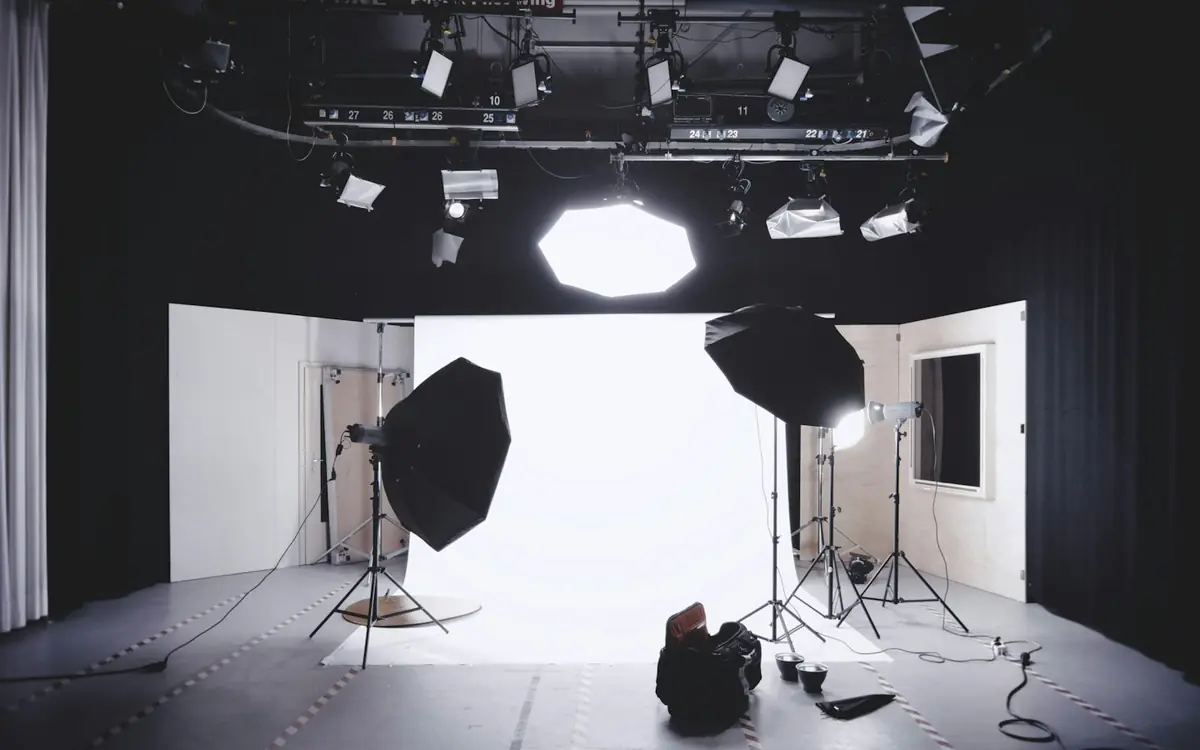
Light. A single on-camera flash bleaches skin detail and flattens colour and tone. To document redness and pigmentation, soft, uniform, diffused light is recommended, without shadows or sharp lines: at least two softboxes behind the photographer, at 45 degrees to the subject (at 90 degrees shadows accentuate, for example, the nasojugal groove).
Background. A uniform, neutral, non-reflective, monochromatic surface: white, grey or light blue. Having a fixed spot in the practice dedicated to photos, with the same background, helps consistency.
The patient. Hair tied back so that no feature is covered, no make-up (the article says this in particular for those who have had laser resurfacing), jewellery and scarves removed. Seated without the backrest reclined, hands on knees, at least a foot from the background. The Frankfort plane, which passes through the lower margin of the orbit and the upper edge of the ear canal, must remain horizontal.
The views. The essential set is five photos, to be taken at every consultation: frontal, two oblique, two lateral.
| View | How the source describes it |
|---|---|
| Frontal | From the top of the head to the jugular notch, patient looking at the camera |
| Oblique, right and left | The whole body turns 45 degrees, not just the face; a strip of cheek is left that separates the nose from the background |
| Lateral, right and left | The body rotated 90 degrees, tip of the nose and chin aligned, neutral expression, head without tilting |
For areas treated with toxin the review asks you to photograph movements as well: eyebrows raised for the forehead, a smile for crow's feet; for the lips, frontal and lateral views at rest and with the lips protruded. For toxin the review indicates the frontal view as the most important to document. The number of shots depends on your protocol: the review on the 360-degree model speaks of a reproducible protocol of 6-12 photos, and the review on photography says that with a fixed protocol a trained assistant takes all the views in under three minutes.
The after. After photos are taken only once enough time has passed for oedema, sutures and haematomas to have resolved, and preferably they are taken by the same person who took the previous ones, after looking at those from the previous visit.
The photo is health data
In the GDPR, «data concerning health» means personal data related to the physical or mental health of a person that reveal information about their state of health (art. 4, point 15, Regulation 2016/679 (opens in a new tab)). Article 9, paragraph 1, prohibits processing them, except in the cases in paragraph 2: among these, explicit consent (letter a) and the purposes of diagnosis, healthcare or therapy under professional secrecy (letter h). A photo taken at a visit, if it serves to document the condition of the skin and to make the comparison, falls under the second case, and that is why the Garante says that for care you do not ask for consent to data processing.
One clarification: recital 51 recalls that the processing of photographs does not systematically constitute processing of special categories, because photos are biometric data only when processed with technical means that allow unique identification. For photos in the record the question, in practice, does not arise: they are part of the clinical documentation and reveal the state of the skin, so you treat them as you treat the rest of the record.
What this implies, in practice:
- those who see them are those entitled to see the record, and every opening should be logged;
- a photo that leaves the record (on a personal phone, in a chat, in an unsecured email) leaves the controls that protect the rest;
- giving them to the patient is a right: see the copy of the record.
Two consents, two moments
Consent to being photographed and consent to publication are not the same thing and are not given in the same gesture.
To being photographed. The review on photography states that written consent must be obtained before photographing, and that it must say that the photos are part of the record. It must, however, be read against the Italian framework: for the clinical photo necessary for care the Garante excludes consent to data processing. What remains, to be written, is that the patient knows that the photos are taken and what they are for: the privacy notice covers this.
To publication. If you want to use the photo for teaching, for a website or for social media, you need separate, explicit consent, for that channel. On the subject of healthcare advertising, Italian Law 145/2018, article 1, paragraph 525 (opens in a new tab), limits the informational communications of those registered with professional bodies to information useful for correct healthcare information and excludes «any element of an attractive and suggestive nature», including offers, discounts and promotions. Paragraph 536 provides that for violations the territorial orders proceed by disciplinary means. Article 56 of the Codice di deontologia adds that informational advertising covers qualifications, activities, characteristics of the service and fees, and is always truthful and correct. How this applies to a «before and after» on social media is the subject of the article before and after photos on social media and the page healthcare advertising. The page on photographs and data collects the Garante's decisions.
Where the photos are kept, and who sees them
How a photo is stored is also a choice of the practice. In Fibonacci (photos and comparison):
- each image is encrypted before leaving the browser, with one key per photo;
- when a photo is opened, who and when is recorded;
- on saving, EXIF metadata, including location, are removed; the program detects faces and lets you choose whether to obscure them (it is not automatic, because in aesthetic medicine the face is often the object of the documentation);
- the photos do not appear in the print previews of clinical documents and are not embedded in the session file, which only states that they exist;
- on delivery to the patient they are decrypted in the package, while the key is never handed over.
On how long the record is kept: retention of the clinical record.
Comparison within the same record
If the photos are in the record, you make the comparison there, without moving them. In the program you choose two images of the same area and open the side-by-side view, with a draggable central bar. Each shot can declare its view (frontal, lateral, 45-degree oblique, dynamic); the tab says which views are missing compared with the series from the most recent visit, without blocking anything. When you shoot from the program's camera with a chosen view, the previous shot of the same view appears transparently on the viewfinder, to repeat the framing.
Two warnings. The automatic alignment that overlays the two shots is an aid to reading, not a correction: the original images are not modified, and aligning two shots taken from different angles makes them superimposable, not comparable. And the comparison is a view, not a document: if you need to hand it over, you hand over the two original photographs. Annotations (arrows, circles, text) are saved separately and never touch the original.
What not to do
- Photograph with a personal phone and leave the photos in the gallery.
- Send the photos by unsecured chat, to a colleague or to the patient.
- Compare two shots taken under different conditions and present them as the result.
- Publish without written consent to publication, specific to the channel.
- Use a photo taken for care for promotion without separate consent.
The short version is in the guide before and after photos.